
Reservoir · Queensland · Australia · BOM Water Data Online
Lake Awoonga
58.8% full
Capacity
776.9 hm³
Volume stored
457 hm³
River
Boyne River
Year completed
1950
Coordinates
24.121°S, 151.270°E
Last updated
2026-09-06
Current fill
58.8%vs 7 days ago
-0.2%losing
vs 1 year ago
+16.7%year-over-year
7-day trend
→stable
Data source: Bureau of Meteorology — Water Data Online (KiWIS) — daily mean storage volume, quality-controlled. Capacity from the BOM Water Storages ArcGIS layer (total design capacity in ML). Last reading: 2026-09-06.
Catchment Weather
Past 30 days + 14-day forecast · Open-Meteo
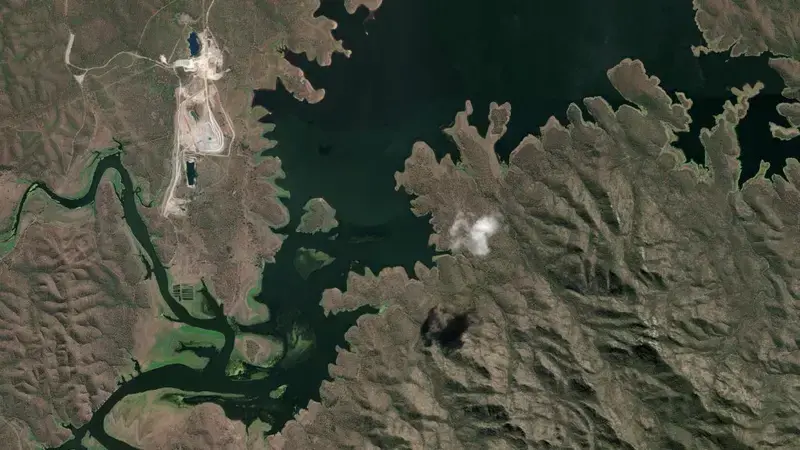
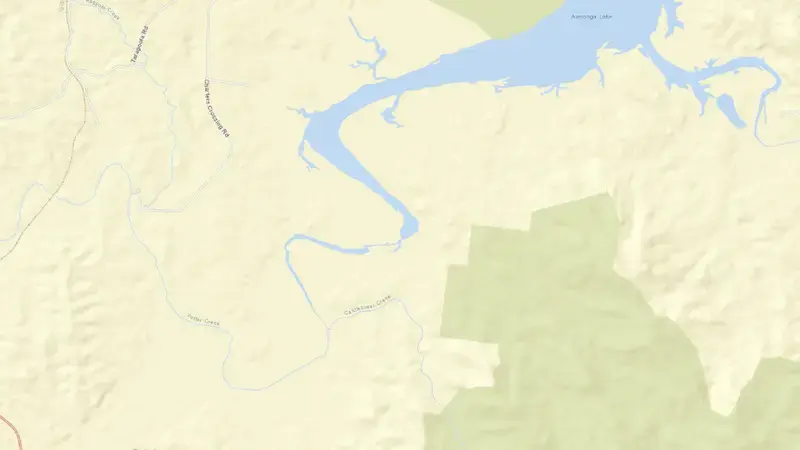
Satellite imagery: Esri, Maxar, Earthstar Geographics. Map: Esri, HERE, Garmin, © OpenStreetMap contributors. -24.121, 151.270 · Open in Google Maps
About Lake Awoonga
As of September 6, 2026, Lake Awoonga is filled to 58.8% of its total capacity, holding roughly 457 hm³ of water out of a maximum 777 hm³. At this level the reservoir is within its normal operating range. Of that total, about 662 hm³ is usable (live) storage.
Over the most recent week on record the fill level has held broadly steady (-0.2 pts), and it is 16.7 points above its level on the same date a year earlier.
Across the readings we hold for Lake Awoonga — 753 data points between September 12, 2023 and September 6, 2026 — the level has ranged from a low of 39.6% (December 19, 2025) to a high of 65.2% (March 17, 2026). On average the reservoir is fullest around April and at its lowest around December.
The dam at Lake Awoonga was completed in 1950. It is operated by BOM primarily for water supply. It lies within the Boyne River Basin basin at 24.121°S, 151.270°E.
Key facts
- Current fill level
- 58.8%
- Water stored
- 457 hm³
- Total capacity
- 777 hm³
- Usable capacity
- 662 hm³
- 7-day change
- ▼ 0.2 pts
- Year-on-year
- ▲ 16.7 pts
- Primary use
- Water supply
- River
- Boyne River
- River basin
- Boyne River Basin
- Year completed
- 1950
- Operator
- BOM
- Coordinates
- 24.121°S, 151.270°E
- Last updated
- September 6, 2026
Recent readings
| Date | Fill level | Volume (hm³) |
|---|---|---|
| 6 Sep 2026 | 58.8% | 457 |
| 5 Sep 2026 | 58.9% | 457 |
| 4 Sep 2026 | 58.9% | 458 |
| 3 Sep 2026 | 58.9% | 458 |
| 2 Sep 2026 | 59.0% | 458 |
| 1 Sep 2026 | 59.0% | 458 |
| 31 Aug 2026 | 59.0% | 459 |
| 23 Aug 2026 | 59.3% | 460 |
| 22 Aug 2026 | 59.3% | 461 |
| 21 Aug 2026 | 59.3% | 461 |
| 20 Aug 2026 | 59.4% | 461 |
| 19 Aug 2026 | 59.4% | 461 |